Emergency Government Support Against the COVID-19 Pandemic
Time:2021/11/08 BJT
1. Key concerns
On October 21, 2021, Organisation for Economic Co-operation and Development (OECD) released the report of COVID-19 Emergency Government Support and Ensuring A Level Playing Field on the Road to Recovery as its policy responses to the pandemic. The report noted that the COVID-19 pandemic has triggered necessary large scale emergency government support for businesses and industries and considered ways to ensure that short-term crisis responses do not result in unintended negative implications for competition and trade in the medium- and long-term. It also highlighted the competition and trade policy tools governments can use to effectively respond to the COVID-19 pandemic while ensuring that this response does not undermine efforts to maintain a level playing field.
The report firstly expressed the concern about the emergency government support. While measures supporting businesses may continue to be needed in the short term, there will come a time when they should be retired to avoid emergency measures becoming longer-term structural support. Structural support has implications not only for ongoing distortions to global markets and competition, and for medium- and long-term economic resilience post-crisis, but also for jobs and, ultimately, for public support for open global markets.
Secondly, the report provided suggestions on emergency government support. From a perspective of specific measures taking support businesses, attention should be paid to the emergency state support measures such as loans and equity injections which have the potential to become means of long-term structural support. From a competition perspective, state support measures should be aligned with the principle of “competitive neutrality”. From a trade perspective, state support should be disciplined under a variety of WTO agreements, in particular the Agreement on Subsidies and Countervailing Measures (ASCM), with a view on not distorting competition in international markets.
Ultimately, the report stressed that open and competitive global markets are underpinned by open and competitive domestic markets. It will be important for countries (regions) to ensure sound design of future programmes, review existing programmes and promote international co-operation on transparency, policy guidance and disciplines to ensure today’s emergency measures do not create tomorrow’s structural support and distortions.
2. Briefing on COVID-19 Pandemic(Issue No.161)
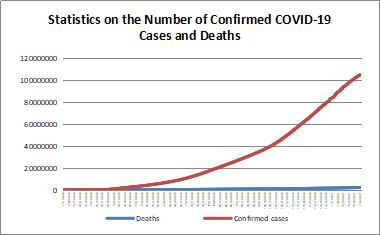
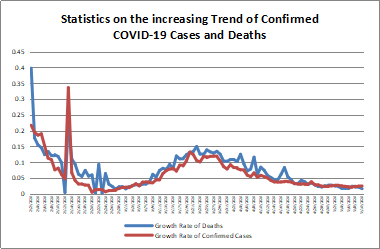
According to WHO statistics, calculated numbers of confirmed COVID-19 cases and deaths reached 246,594,191 and 4,998,784 by November 2, 2021. The U.S., the UK, Russia, Turkey, and Ukraine were the five countries (regions) with the highest number of new confirmed cases in the past seven days. The U.S., Russia, Ukraine India and Romania were the five countries (regions) with the highest number of new deaths in the past seven days.
https://covid19.who.int/
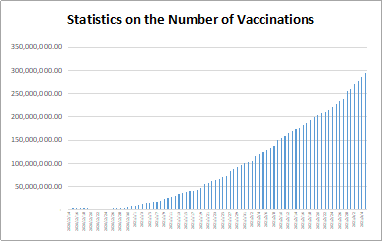
WHO warns vaccine inequality will prolong COVID-19 pandemic. Statistics from WHO’s website presented that 6,893,866,617 doses had been administered by November 2, 2021. On 28 October local time, the WHO remarked at a regular media briefing that the global number of reported cases and deaths from COVID-19 is now increasing for the first time in two months. It is a reminder that the COVID-19 pandemic is far from over. The pandemic persists in large part because of inequitable access to test tools and vaccines. WHO stated that eighty times more tests and vaccines have been administered in high-income countries than low-income countries. Therefore, more funds are needed to help countries (regions) at high risk of COVID-19 pandemic obtain tools to fight the pandemic. Previously, the WHO stated that the “Strategy to Achieve Global COVID-19 Vaccination by Mid-2022” will require about 500 million doses of vaccine to meet the target to vaccinate 40% of the world population by the end of this year.
https://ourworldindata.org/covid-vaccinations
In terms of the restrictions taken by countries(regions), we focus on the restrictive policies in different regions. In America, protests took place in cities across the United States against the federal government’s vaccine mandate and several Republican states even filed lawsuits against the federal government. In the meantime, many Americans still actively take the vaccine. In Europe, the Russian government introduced a ban on bars, clubs and restaurants opening into the night as part of measures designed to bring down a nationwide spike in COVID-19 infection and a record spate of deaths. In Oceania, the Therapeutic Goods Administration (TGA) of Australia recognised the widely used COVID-19 vaccines in China and India on November 1, including China’s CoronaVac, BBIBP-CorV vaccines and AstraZeneca vaccines manufactured in India and Covaxin developed in India. Travellers who are fully vaccinated by the above vaccines will be allowed to enter Australia. In Asia, Israel opened up to vaccinated travellers on November 1. Foreigners can enter Israel with a negative covid test from the previous 72 hours and if their last vaccine dose was administered less than six months ago. Unvaccinated children remain subject to quarantine rules.